
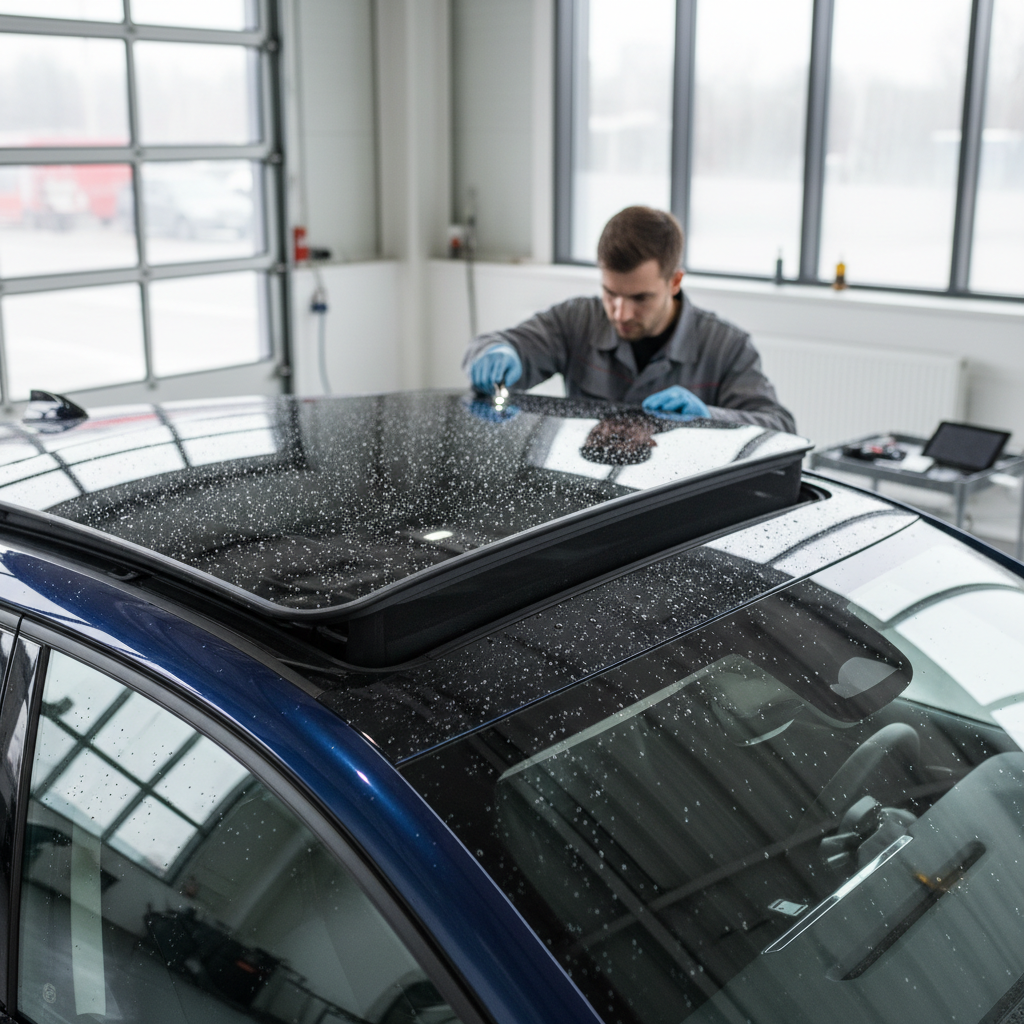
Sunroof Leak Test: How to Find and Fix Car Water Leaks
Got water dripping from your headliner? Learn how to perform a simple sunroof leak test at home to identify clogged drains or failing seals before water damages your car.
Living in Metro Vancouver means enduring months of relentless coastal rain. When water suddenly begins dripping from your headliner, trickling down the A-pillar, or pooling on your floorboards, the culprit is very often an overlooked component: your vehicle's sunroof.
Conducting a proper sunroof leak test can help you isolate the problem before moisture causes mold, foul odours, and expensive electrical damage. In this guide, our auto glass specialists walk you through how to pinpoint the leak, common causes, and what to do next.
Why Do Sunroofs Leak?
A common misconception is that a sunroof's rubber perimeter seal is meant to be 100% waterproof. In reality, modern automotive sunroofs and panoramic roofs are designed to manage water, not completely block it.
Small amounts of water naturally slip past the outer rubber weatherstripping. Vehicle manufacturers account for this by building a catchment tray underneath the glass panel, fitted with drain tubes at each corner. These flexible tubes run through your roof pillars and exit near the wheel wells or rocker panels beneath the vehicle.
Sunroof leaks typically happen due to three main issues:
- Clogged Drain Tubes: Pine needles, road grime, pollen, and decaying leaves build up in the drain openings, causing rainwater to back up and overflow into your cabin.
- Disconnected or Cracked Drain Hoses: Over time, drainage lines can shrink, detach from the sunroof tray fitting, or crack due to age and temperature swings.
- Damaged Perimeter Seals: While not entirely water-tight, a torn, hardened, or misaligned rubber seal allows too much water in for the drains to handle.
Step-by-Step DIY Sunroof Leak Test
Before tearing apart your vehicle's interior trim, performing a controlled sunroof leak test will help you identify whether you are dealing with a clogged drain line or an external seal failure.
1. Visual Inspection
Park your vehicle on level ground. Open the sunroof fully and inspect the metal or plastic channel around the opening:
- Look for standing water in the track corners.
- Check for visible debris, pine needles, or dirt packed into the drain holes (usually found in the front corners of the tray).
- Inspect the rubber gasket around the glass for dry rot, tears, or brittleness.
2. The Cup and Water Test
This is the simplest way to test whether your sunroof drains are flowing freely:
- Grab a small jug or squeeze bottle filled with clean water (about 250–500 ml).
- Carefully pour water directly into the drain channel near the front drain holes. Do not spray water forcefully with a pressure washer.
- Watch how quickly the water drains. It should flow away immediately.
- Look beneath your vehicle just behind the front wheel wells. You should see a steady drip or puddle of water exiting onto the pavement.
- Repeat the test for the rear drains if accessible (you may need to park on a slight incline to direct water to the back).
The Result: If the water pools in the track, drains sluggishly, or begins dripping onto your headliner, the drain line is clogged or detached.
3. The Garden Hose Seal Test
If your drains clear water quickly during the cup test, but you still experience leaks during heavy rain, test the outer seal:
- Close the sunroof completely.
- Have a helper sit inside the cabin with a bright flashlight.
- Using a garden hose on a gentle shower setting (no nozzle pressure), run water over the roof for 3 to 5 minutes.
- The person inside should watch the edges of the sunroof glass, the overhead console, the visors, and the A-pillars.
- If water rushes past the seal faster than the tray can channel it away, the glass panel may be misaligned or the gasket may need replacement.
How to Clear a Clogged Sunroof Drain
If your test reveals a blockage, you can attempt to clear it using gentle DIY methods:
- Weed Trimmer Line: Thread a length of smooth, flexible 0.065-inch or 0.080-inch plastic trimmer line down into the drain hole. Gently twist and feed it down through the hose to dislodge the clog. Avoid using metal wire or coat hangers, which can puncture the rubber hose or disconnect it from its elbow fitting.
- Low-Pressure Compressed Air: Using a blow gun attachment set to low pressure (under 30 PSI), gently puff air into the drain opening. Be extremely cautious—too much pressure can blow the drain hose completely off its connector inside the ceiling.
- Warm Water Flush: Once the obstruction is loosened, flush the line with warm water to clear remaining sediment.
When to Bring It to an Auto Glass Professional
While a simple leaf blockage can sometimes be resolved at home, many sunroof issues require professional attention:
- Detached Hoses: If the hose has popped off behind your headliner, water will empty directly into your roof structure. Fixing this requires carefully dropping the interior headliner without creasing it.
- Misaligned Glass Panels: If the sunroof sits unevenly in its opening, the mechanism may need calibration or track service.
- Saturated Carpets: Trapped moisture beneath your vehicle's carpet underlay creates hidden mold and can corrode under-floor wiring harnesses.
At Glassco Auto & Window, our certified technicians diagnose and repair all types of auto glass and leak issues across Metro Vancouver. Whether it's an intractable sunroof leak, a failing windshield seal, or a damaged panoramic roof panel, we back our work with a lifetime workmanship warranty. We also handle ICBC comprehensive glass claims with direct billing to make your repair seamless.
Keep Your Cabin Dry and Mold-Free
Don't let rainy West Coast weather ruin your car's interior. If your sunroof leak test reveals an issue you can't clear, or if you suspect your water leak is coming from your windshield perimeter, our team is here to help.
Contact Glassco Auto & Window at +1 604-897-5441 or visit our booking page to schedule an inspection at one of our convenient locations across Metro Vancouver.
Need glass help in Metro Vancouver?
Book online in 60 seconds, or call us anytime — we always answer.